Best Language Learning Apps: Honest About What Actually Works
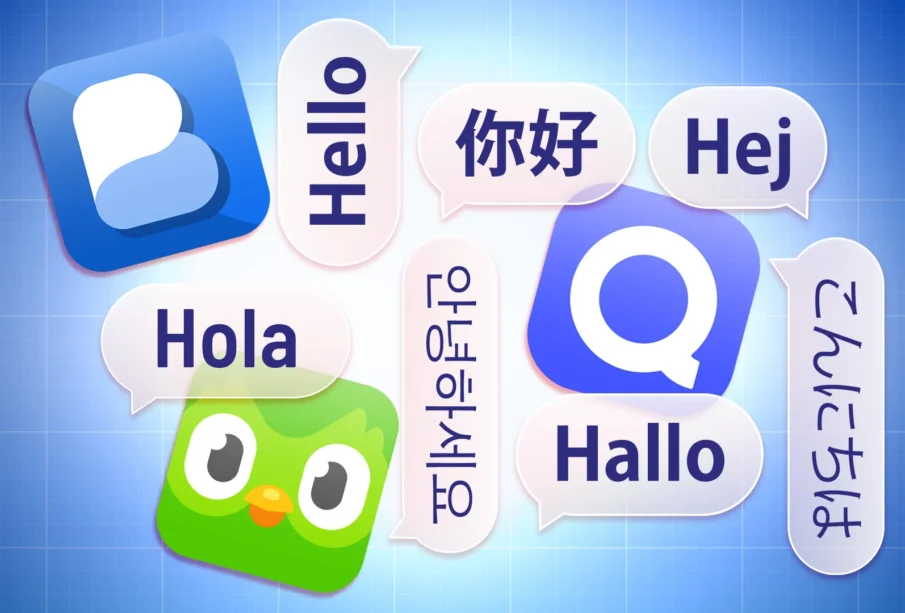
The best language learning apps vary based on your end goal. Duolingo is excellent for building a daily habit, Anki excels at vocabulary retention, and italki is the fastest path to actual speaking ability. It is important to distinguish between an app that makes you feel productive and one that actually makes you fluent.
Here’s a breakdown of the best app for each learning goal – matched to what you’re actually trying to achieve, not what the marketing says.
Best App by Learning Goal
| Learning Goal | Best App | Approach | Time to Results | Free Option? |
| Daily habit / gamification | Duolingo | Short game-like lessons, streaks, XP system | Weeks (habit); months (real progress) | Yes – fully functional free tier |
| Vocabulary retention | Anki | Spaced repetition flashcards (SRS) | Immediate – the most efficient memorisation method known | Yes – free on desktop; $25 iOS one-time |
| Grammar structure | Babbel | Structured grammar-led lessons by native speakers | Weeks to conversational foundation | No – subscription from $7/mo |
| Speaking practice | italki | 1-on-1 lessons with community tutors or professional teachers | Fast – accelerated by real feedback | No – pay per lesson ($8-$40/hr) |
| Listening comprehension | Pimsleur | Audio-only, spaced repetition for spoken language | Months – designed for commuting | Trial only – $14.95/mo |
| High-repetition production | Glossika | Mass sentence training at natural speed | Months – best for intermediate to advanced | Free trial – $30/mo |
| Reading + content immersion | LingQ | Learn from real content (books, podcasts, videos) | Months – best post-beginner | Limited free – $12/mo |
The Honest Duolingo Assessment
Duolingo is the most downloaded language app in the world, and for one specific purpose it’s genuinely excellent: building the daily habit of engaging with a language. The streak mechanic, the short lessons, the gamification – these are well-designed for behaviour change.
Where it stops working: Duolingo teaches pattern recognition, not production. You learn to select the right answer from options. That’s not the same skill as generating a sentence under pressure in a real conversation. After a year of Duolingo, most learners can recognise a lot and produce very little. That’s useful – but it’s not conversational fluency.
Use Duolingo for: building the habit and keeping the language warm. Don’t use it as your only tool if actual communication is the goal.
Why Anki Is the Most Powerful Vocabulary Tool
Anki is unglamorous software that’s been around since 2006. It has a steep learning curve, ugly interface, and zero viral appeal. It’s also the most evidence-backed language learning tool available, because it implements spaced repetition – the technique that shows you a card just before you’re about to forget it, optimising memory formation for long-term retention.
The research on spaced repetition is consistent: it produces dramatically better retention per hour of study than traditional review methods. Learning 20 words a day with Anki, you can have a 3,000-word working vocabulary (enough for basic conversation in most languages) in approximately five months. There’s no app that matches it for pure vocabulary building.
Why Speaking Apps Produce Results Faster
Here’s the uncomfortable truth: the fastest way to learn to speak a language is to speak it, badly, in front of another person who corrects you. No app simulates this. italki and Preply connect you with native speakers for paid lessons, and even one 30-minute session per week with a community tutor adds more production ability than hours of solo app use.
- Community tutors on italki: $8-$20/hr – non-professional teachers, usually native speakers, conversational practice focus
- Professional teachers: $20-$60/hr – structured lessons, grammar correction, progress tracking
- Preply: Similar model to italki with a stronger platform interface and slightly higher pricing
App Comparison: Quick Reference
| App | Platform | Monthly Cost | Best Level | Key Weakness |
| Duolingo | iOS, Android, Web | Free / $6.99 (Plus) | Beginner-Lower Intermediate | Teaches recognition, not production |
| Anki | iOS ($25), Android, Desktop (free) | Free (desktop) | All levels | Steep setup curve; no guided curriculum |
| Babbel | iOS, Android, Web | $7-$13 | Beginner-Intermediate | Grammar-heavy; not conversational |
| italki | iOS, Android, Web | Pay per lesson ($8-$40/hr) | All levels | Quality varies by tutor; requires self-direction |
| Pimsleur | iOS, Android | $14.95/mo | Beginner-Intermediate | Audio-only; no reading/writing component |
| LingQ | iOS, Android, Web | $12/mo | Intermediate-Advanced | Content-led – overwhelming for beginners |
The Combination That Actually Works
No single app teaches you a language. The most effective learners stack tools to cover different skills:
- Daily habit: 10-15 minutes of Duolingo or Babbel to keep the language active
- Vocabulary: 15-20 minutes of Anki – new words daily, review queue never let to overflow
- Speaking: 1-2 italki sessions per week – the thing most learners skip and the thing that matters most
- Listening: Podcasts, YouTube, or Pimsleur during commutes and exercise
Final Thought
No app teaches you a language. They give you the building blocks, the vocabulary, the patterns. The language gets learned in the conversations you’re brave enough to have – halting, error-filled, embarrassing ones – with actual people. Every hour you spend in apps is preparation for that. Don’t let it become a substitute for it.